Oud basics · Field note 001
Oud and perfume are not opposites
14 August 2026 · 7 min read
Oud can be the material, the oil or the mood of a finished fragrance. That small distinction clears up a lot of confusion.
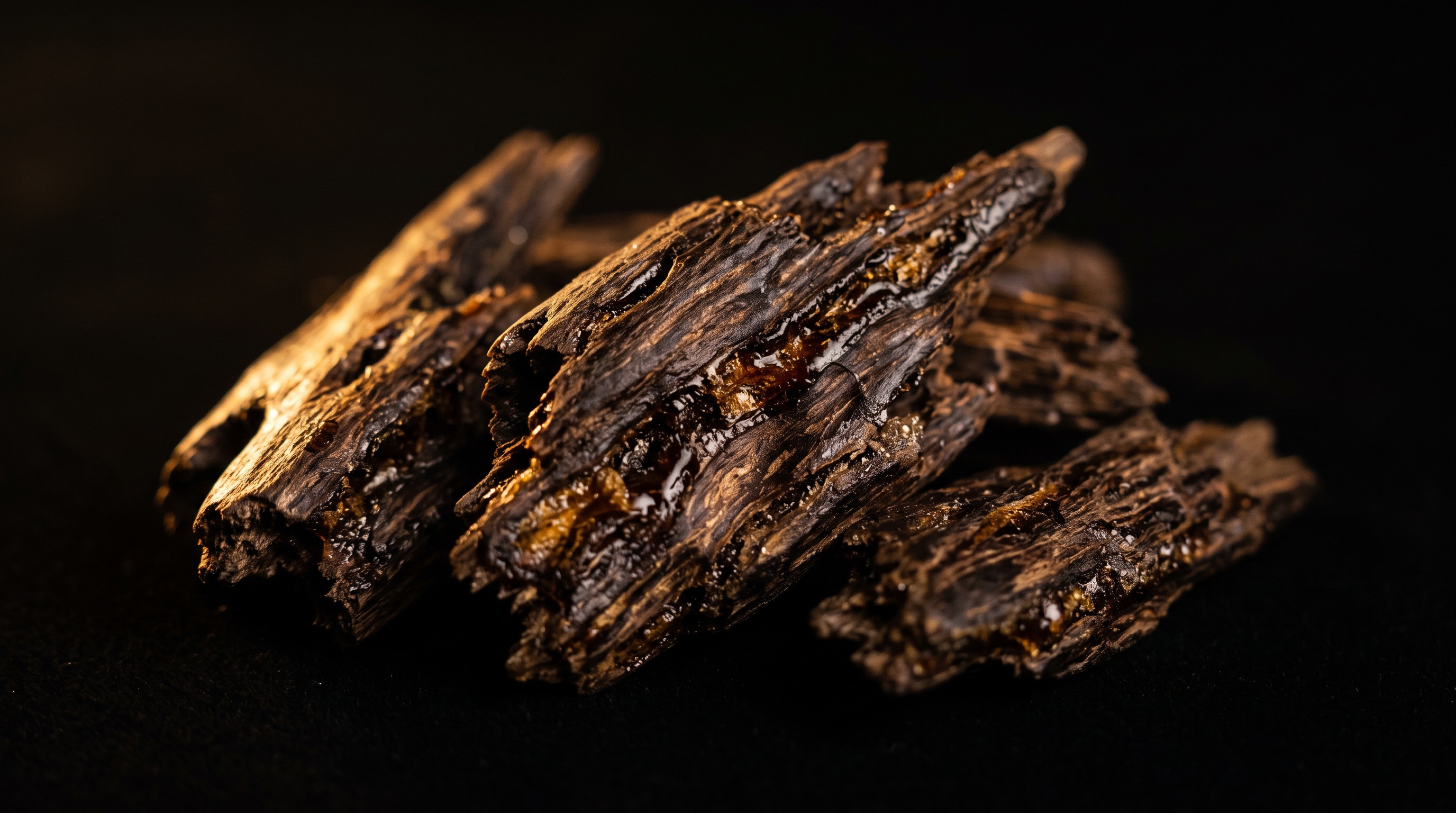
Perfume is the finished composition. Oud is one possible material inside it. But pure oud oil can also be worn on its own, which is why the language gets slippery.
Think of coffee. A bean is not the same thing as a finished cup, yet people use the word coffee for both. Oud works in a similar way. It can mean resinous agarwood, oil distilled from that wood, or a perfume built to evoke its smell.
So “oud versus perfume” is not quite the right contest. The more useful question is this: what kind of oud are you smelling, and how has it been used?
What oud actually is
Oud begins with trees in the Aquilaria and Gyrinops genera. When the wood is wounded and responds by producing aromatic resin, parts of the pale timber gradually become darker, heavier and fragrant. This resin-rich wood is agarwood. In Arabic, it is often called oud.
The wood may be burned as incense. It may also be soaked, fermented and distilled into an oil. A tiny swipe of that oil can smell woody, leathery, smoky, honeyed, medicinal, fruity or animalic. Region, tree, resin content, ageing and distillation all matter. Two real oud oils can feel as different as espresso and lapsang tea.
That variability is part of the pleasure. It is also why “smells like oud” is never a complete description.
What perfume adds
A perfume is a composition. A perfumer balances aromatic materials into an accord, then puts that concentrate into a wearable format, often alcohol or oil. Oud might sit at the centre. It might appear only in the base. Sometimes the bottle contains natural oud oil. Sometimes the effect comes from other woods, resins and aroma molecules. Often it is a combination.
None of those approaches is automatically better. Natural oud can bring remarkable texture and movement, but an oud accord gives a perfumer control, consistency and a different creative range. The honest question is not “real or fake?” It is “what did the perfumer intend, and does the result move you?”
Concentration labels do not settle the question either. Eau de toilette, eau de parfum and extrait describe common concentration ranges, not a universal legal ladder. The International Fragrance Association notes that these terms vary by market and brand. An eau de parfum is not guaranteed to outlast an eau de toilette, and neither tells you how much oud is inside.
Usually close to the skin. Changes slowly. Every batch has its own grain and rough edges.
Built as a full composition. Can project further. May frame oud with rose, saffron, amber, citrus or smoke.
Why oud is becoming more popular
Oud is not new. Its use across the Middle East, South Asia and East Asia stretches back centuries. What is new is the size of its global audience.
Part of that rise belongs to fragrance more broadly. People are collecting scents for different moods instead of buying one signature bottle. In 2025, Le Monde reported rapid growth in prestige fragrance and a sharp increase in new perfume launches. It also singled out bold notes such as oud and amber as beneficiaries of social discovery.
Oud suits that moment. It is distinctive enough to start a conversation, and it has the depth many people associate with niche perfumery. Modern compositions have also created easier entry points. A rose and oud perfume can feel plush and familiar. A citrus oud can be surprisingly bright. A soft amber oud may barely resemble the medicinal or animalic oils that first gave the material its intimidating reputation.
There is another reason: people want to know where a scent comes from. Oud offers provenance, craft and regional character in a category that can otherwise feel anonymous. That story is compelling, but it deserves care. Oud did not suddenly become valuable when Western luxury houses noticed it. Its history, language and rituals were already rich.
One caution before you buy
Agarwood is precious because resin formation is slow and unpredictable. International trade in agarwood-producing species is controlled under CITES Appendix II. If a brand claims to use natural oud, look for clear sourcing, traceability and a realistic price. Vague language such as “rare oriental wood” tells you very little.
There is no shame in choosing a well-made oud accord. In many perfumes, it is the more transparent and sustainable choice. What matters is that a brand does not borrow the romance of wild agarwood while hiding what is actually in the bottle.
Start with the smell, not the mythology. The right oud should make you lean in for another breath.
How to find your way in
If you already wear rose, try rose and oud. If you like dry woods, look for cedar, vetiver or incense around it. Fans of amber and vanilla may prefer a sweeter Gulf-style composition. If you want the raw material itself, sample pure oils in tiny amounts and give each one an hour before judging it.
Oud rewards patience. The opening can be strange. Ten minutes later it may turn warm, polished and deeply personal. That transformation is the point.
Discover your oud profile →Sources and further reading